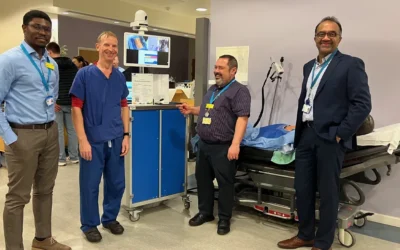
Professor Vinod Menon recently delivered an educational session for GPs on gastro-oesophageal reflux disease (GORD), dyspepsia and hiatus hernia, focusing on when patients should be referred and what treatment options may be available.
GORD is very common, affecting around 1 in 4 adults. It is often underdiagnosed, partly because many people self-medicate with over-the-counter treatments and do not always seek medical advice. Symptoms do not always match the severity of the underlying condition, which is why persistent reflux should not be ignored.
Typical symptoms of GORD include heartburn, a burning feeling in the lower chest, acid regurgitation and belching. Some people may also experience less typical symptoms such as a chronic cough, hoarseness, asthma-like episodes, halitosis or dental enamel damage.
A hiatus hernia can also contribute to reflux symptoms. This occurs when part of the stomach moves up through the diaphragm into the chest. Not all hiatus hernias need treatment, especially if they are found incidentally and are not causing symptoms. However, referral may be appropriate when symptoms include reflux, regurgitation, nausea, vomiting, anaemia, haematemesis or respiratory symptoms.
Treatment for GORD may begin with lifestyle changes and medication, including acid suppression with proton pump inhibitors. However, some patients continue to experience significant symptoms despite treatment. Others may have volume reflux, drug intolerance, Barrett’s oesophagus, strictures or a preference to avoid lifelong medication.
In carefully selected patients, surgery may be considered. Professor Menon has extensive experience in laparoscopic hiatus hernia repair and anti-reflux surgery, with personal data from more than 900 procedures performed over a 22-year period.
The key message is that persistent reflux, swallowing difficulty, vomiting, unexplained weight loss, blood in vomit or stool, or symptoms affecting day-to-day quality of life should be assessed properly. Early specialist review can help confirm the diagnosis, identify complications such as Barrett’s oesophagus, and guide the most appropriate treatment.
GORD and hiatus hernia are common, but they are not always simple. For patients with ongoing symptoms, expert assessment can make a significant difference to both symptom control and long-term care.